It has been over 25 years since the earliest edition of "Everything You Ever Wanted to Know About Laminates...but Were Afraid to Ask" was pounded out on an old TRaSh-80 Computer. It has undergone periodic review and editing, including adaption for use on our website.
In response to a growing concern within the Electronic Industry to the transition to Halogen-Free laminates (HFR-Free) within the Client Market space (Desktop and Notebook computers) iNEMI initiated a HFR-Free Leadership Workgroup to evaluate the readiness of the Industry to make this transition. The HFR-Free Leadership WG concluded that the electronic industry is ready for the transition and that the key electrical and thermo-mechanical properties of the new HFR-Free laminates can meet the required criteria. The HFR-Free Leadership WG verified that the laminate suppliers can meet the capacity demands for these new HFR-Free laminates and developed a "Test Suite Methodology" (TSM) that can facilitate the comparison and choice of the right laminate to replace brominated FR4 in the Client space.
This presentation surveys the most significant via and via-related laminate failure mechanisms from past to present using data from current induced thermal cycling (CITC) testing, failure analysis, and other sources. The relative life and failure modes of thru vias, buried vias, and microvias (stacked vs. non-stacked) are compared, along with the affect of structure, materials, and peak temperatures on the above. The origin of via-induced laminate failures such as "eyebrow cracks" and Pb free related internal delamination is also explored.
An evaluation of four FR4 laminates in commonly used stack-ups was done to determine their survivability for the Pb-free HASL process followed by a worst case Pb-free manufacturin
System operating speeds continue to increase as a function of the consumer demand for such technologies as faster Internet connectivity, video on demand, and mobile communications technology. As a result, new high performance PCB substrates have emerged to address signal integrity issues at higher operating frequencies. These are commonly called low Dk and/or low loss (Df) materials. The published "typical" values found on a product data sheet provide limited information, usually a single construction and resin content, and are derived from a wide range of test methods and test sample configurations. A printed circuit board designer or front end application engineer must be aware that making a design decision based on the limited information found on a product data sheet can lead to errors which can delay a product launch or increase the assembled PCB cost. The purpose of this paper is to highlight critical selection factors that go beyond a typical product data sheet and explain how these factors must be considered when selecting materials for high speed applications
Drive Backups -- I'd like to do some drive imaging on my old windows equipment for backups, mainly boat anchor prevention.
Heller, CP45, DEK, various shades of XP embedded. There aren't many good options that I'm finding, for sure not in new software.
Any ideas? Or just fiddle my way through Clonezilla or DD?
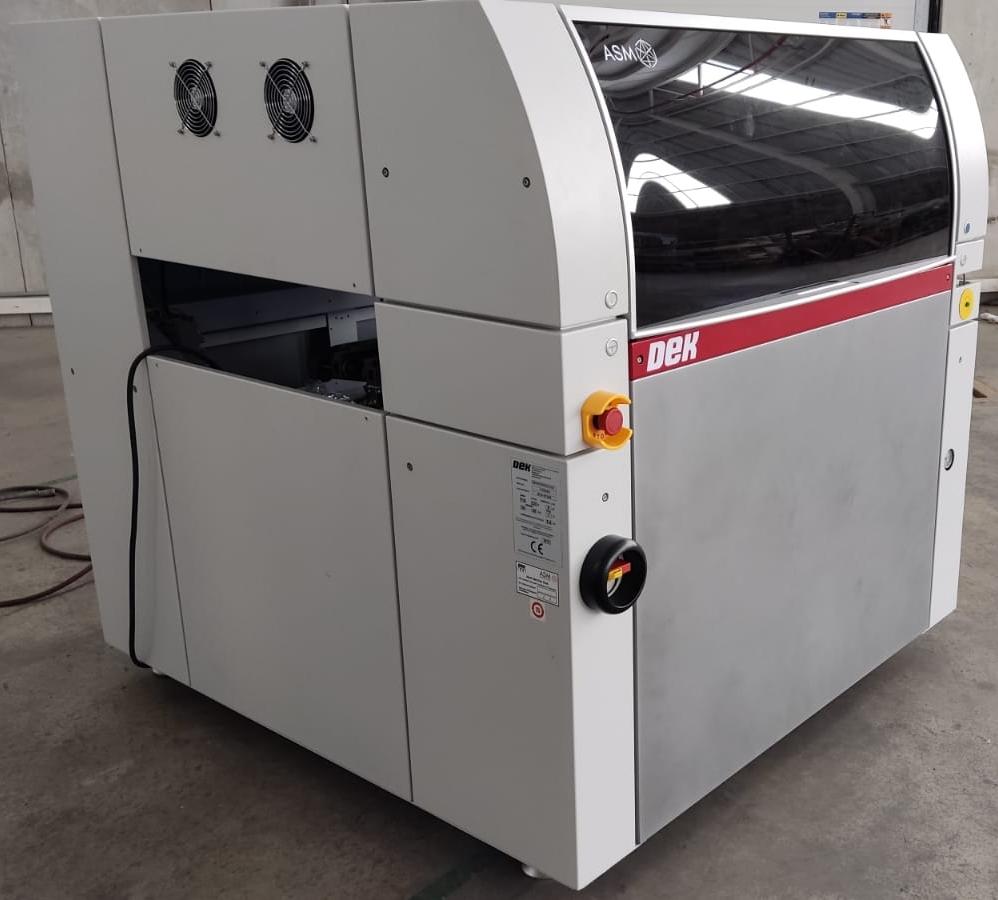
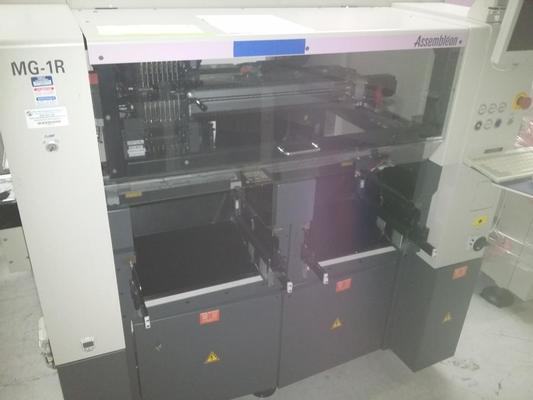
DEK 265Lt vision issue -- hi,
I have very very old DEK 265 Lt
And I have a problem that Mr. processman described a long time ago. But no one answered him.
Maybe someone can help me now?
"We have a strange issue with a DEK 265 Lt, it powers up and initialises fine. Camera LED`s flash, cognex card intitialises with no error.
The issue is we have no fiducial recognition or image on the monitor. Have swapped out camera, cognex card, motherboard, monitor and wiring loom and all are fine?? Any ideas what the issue could be? Power supply maybe?"
The SMTA is excited to introduce a new event for the electronics manufacturing industry which takes place on March 26, 2024 in Peoria, Arizona, USA. The Ultra High Density Interconnect Symposium will be held at the Peoria Sports Complex....
With synchronous motion, the SELECT Synchro system boosts throughput 20-40% for most applications in a 60% smaller footprint. Can replace existing selective soldering operations to improve yield and save space for many through-hole and SMT mixed-technology soldering applications. Can help electronics manufacturers step away from wave soldering with its faster, flexible, and efficient operations, compared to typical selective soldering solutions....
In a letter signed by 54 microelectronics executives, IPC and Printed Circuit Board Association of America (PCBAA) are calling on Congress to fully fund the Defense Production Act Purchases Account at the House-passed level of $618 million and $1.08 billion for the Industrial Base Analysis and Sustainment program....
SMTA is a non-profit international association of companies and individuals (totalling 4,000) involved in all aspects of advanced electronics assembly, surface mount and related technologies.
IPC is a US-based trade association dedicated to the competitive excellence and financial success of its nearly 2,600 member companies which represent all facets of the electronic interconnection industry, including design, printed wiring board manufacturing and electronics assembly.