That manual soldering produces harmful substances in the form of aerosols is a known problem in the electric and electronic industry. The lead-free electronics solders used today have done little to change that. The soldering fumes still contain particles which are formed by the solder and the flux agent. These particles have a high potential of causing permanent damage to the workers' health. Due to their small diameter between 10 and 150 nm, they can penetrate all the way into the alveoli. But numerous studies also show that nanoparticles can reach all areas of the body through the bloodstream [1].
Soldering system vendor SEHO runs a Technology Center in its headquarters in Germany, in which all available machines are exhibited and demonstrated. Additionally, the SEHO Academy provides knowledge as a perfect balance of theory and practical application. In both facilities soldering fume occurs, which has damaging effects on human health, manufacturing equipment and products. That's why the company had installed several air cleaning solutions in terms of fume extraction technology. How and why they take care of clean air is the subject of this article.
The idea of the value chain is based on the process view of organizations, the idea of seeing a manufacturing (or service) organization as a system, made up of subsystems each with inputs, transformation processes and outputs.[1] The definition of a value-added chain by Michael E. Porter is one of many to be found in reference books, works and on websites. In principle, it involves a sequence of activities, executed by a manufacturing company to develop, produce, sell, ship, and maintain products or services.
Three main parameters essentially influence a value-added chain:
• Direct activities — research, development, production, shipment etc.
• Indirect activities — maintenance, operation, occupational safety, environment etc.
• Quality assurance — monitoring, test/inspection; quality management etc.
In particular, indirect activities and quality assurance generate a greater part of the costs in product manufacturing. This article principally focusses on the indirect activities, among them air purification.
The introduction of lead-free solders resulted in a selection of different chemistries for solder pastes. The higher melting points of lead-free alloys required thermal heat resistant rosin systems and activators that are active at elevated temperatures. As a result, more frequent maintenance of the filtration systems is required and machine downtime is increased.
Last year a different method of cleaning reflow ovens was introduced. Instead of cooling down the process gasses to condensate the residues, a catalyst was used to maintain the clean oven. Catalytic thermal oxidation of residues in the nitrogen atmosphere resulted in cleaner heating zones. The residues were transformed into carbon dioxide. This remaining small amount of char was collected in the catalyst. In air ovens the catalyst was not seen as a beneficial option because the air extracted out of the oven was immediately exhausted into the environment. When a catalyst is used in an air environment there is not only the carbon dioxide residues, but also water. When a catalyst is used in an air reflow oven the question is where the water is going to. Will it condensate in the process part of the oven or is the gas temperature high enough to keep it out of the process area? A major benefit of using a catalyst to clean the air before it is exhausted into the environment is that the air pollution is reduced dramatically. This will make environmental engineers happy and result in less pollution of our nature. Apart from this, the exhaust tubes remain clean which reduces the maintenance of air ovens.
This paper will give more detailed information of catalyst systems during development and performance in production lines.
reflow/wave exhaust to outside -- Anyone involved in responsibility of reflow/wave solder equipment and the exhaust from both. Do you "scrub" or clean the exhaust before it gets released to outside? I would be referencing alcohol-based fluxes/pastes. There is a concern by safety folks (not familiar with electronic assembly) that we may be violating some kind of health code. Would rather not involve state agencies as they tend to overreact (IMHO). Thanks
Views: 1339
MPM Momentum -- Good day to all, the question is, has anyone used stepped down profile in separation, and if so, for what purposes?
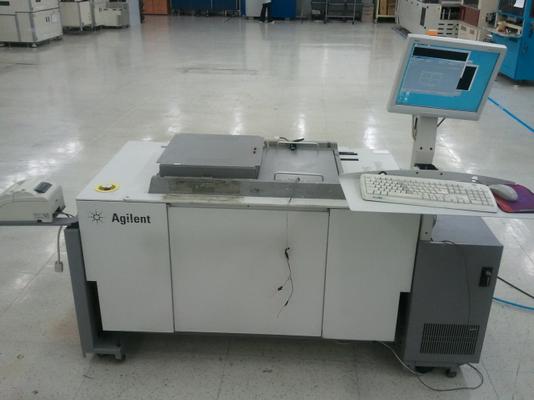
Equipment from a Custom Thick Film Hybrid Micro Electronics Manufacturer
Clean Room, Assembly, Test & Inspection Equipment — Owner Retiring, Everything Must Go!...
As excitement builds for SMTA's premier industry strategy event, the announcement of a rebranding initiative clarifies its purpose and stature. The event, previously known as the Pan Pacific Microelectronics Symposium, now carries the moniker Pan Pacific Strategic Electronics Symposium. This name change reflects the commitment to innovation, leadership and vision this event continues to provide for a constantly evolving electronics manufacturing industry....
SMTA is a non-profit international association of companies and individuals (totalling 4,000) involved in all aspects of advanced electronics assembly, surface mount and related technologies.
IPC is a US-based trade association dedicated to the competitive excellence and financial success of its nearly 2,600 member companies which represent all facets of the electronic interconnection industry, including design, printed wiring board manufacturing and electronics assembly.