Industry Directory | Consultant / Service Provider
We specialize in thermal management consulting and R&D services for the electronics /telecommunications industry. We guarantee you personalized service, attention to detail, and the shortest turnaround time, world-wide.
Industry Directory | Manufacturer
Thermally Managed ( up to 1000 W /m K thermal transfer rate ), CTE controlled, Very Rigid, Light Weight STABLCOR PCB / Substrate Technology
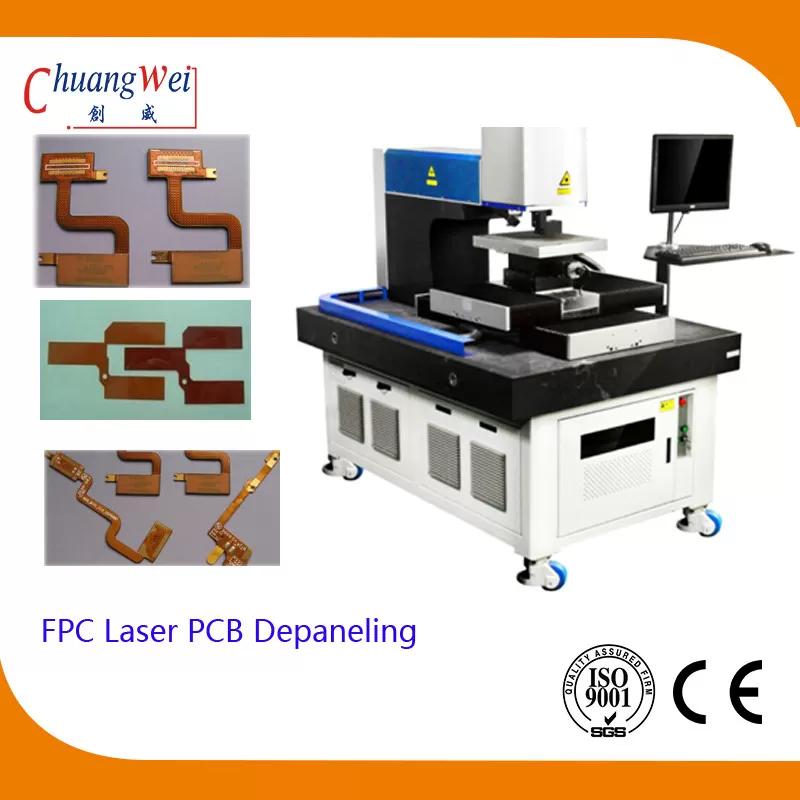
PCB / Flex Circuit Pcb Depaneling Equipment without Stress 220V Specification Laser Q-Switched diode-pumped all solid-state UV laser Laser Wavelength 355nm Laser Power 10W/12W/15W/18W@30KHz Positioning

FPC / PCB Laser Depaneling Machine,Pcb Laser Cutting Machine from Chuangwei Description: With the advent of new and high power plus lower cost UV lasers there is greater adoption of cutting of materials like printed circuit boards. This boards may
Technical Library | 2017-11-15 22:49:14.0
While a significant level of voiding can be tolerated in solder joints where electrical conductivity is the main requirement, voiding at any level severely compromises thermal conductivity. For example, in LED lighting modules effective conduction of heat through the 1st level die attach to the substrate and then through the 2nd level attach to the heat sink is critical to performance so that voiding in the solder joints at both levels must be minimized. (...) In this paper, the authors will review the factors that influence the incidence of voids in small and large area solder joints that simulate, respectively, the 1st and 2nd level joints in LED modules and discuss mitigation strategies appropriate to each level. They will also report the results of a study on the effect on the incidence of voids of flux medium formulation and the optimization of the thermal profile to ensure that most of the volatiles are released early in the reflow process.
Technical Library | 2020-10-14 14:33:36.0
Epoxy based adhesives are prevalent interface materials for all levels of electronic packaging. One reason for their widespread success is their ability to accept fillers. Fillers allow the adhesive formulator to tailor the electrical and thermal properties of a given epoxy. Silver flake allow the adhesive to be both electrically conductive and thermally conductive. For potting applications, heat sinking, and general encapsulation where high electrical isolation is required, aluminum oxide has been the filler of choice. Today, advanced Boron Nitride filled epoxies challenge alternative thermal interface materials like silicones, greases, tapes, or pads. The paper discusses key attributes for designing and formulating advanced thermally conductive epoxies. Comparisons to other common fillers used in packaging are made. The filler size, shape and distribution, as well as concentration in the resin, will determine the adhesive viscosity and rheology. Correlation's between Thermal Resistance calculations and adhesive viscosity are made. Examples are shown that determination of thermal conductivity values in "bulk" form, do not translate into actual package thermal resistance. Four commercially available thermally conductive adhesives were obtained for the study. Adhesives were screened by shear strength measurements, Thermal Cycling ( -55 °C to 125 °C ) Resistance, and damp heat ( 85 °C / 85 %RH ) resistance. The results indicate that low modulus Boron Nitride filled epoxies are superior in formulation and design. Careful selection of stress relief agents, filler morphology, and concentration levels are critical choices the skilled formulator must make. The advantages and limitations of each are discussed and demonstrated.
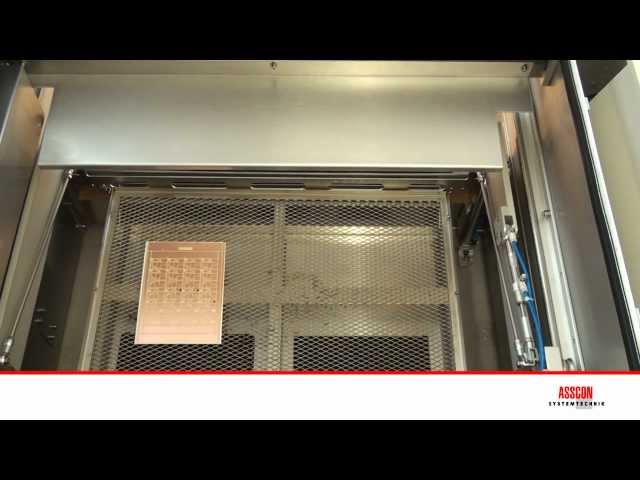
ASSCON’s vacuum soldering process combines the average of the vapor-phase with the vaccum process. The vaccum module consists of the evacuation unit mounted in the process chamber where it is secured with quick-locks for fast and easy removal f
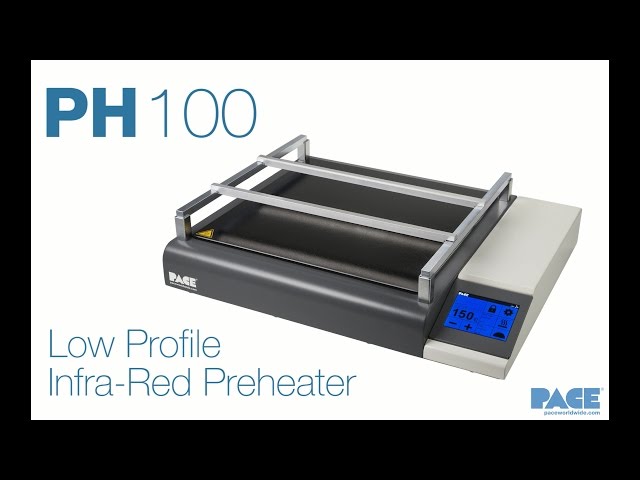
Do you repair thick multilayer printed circuit boards that are connected to metal ground planes? Avionics modules that are designed to dissipate heat? Heat-sinking pcb's utilizing lead-free alloys that seem to require a blow-torch to solder effective
Career Center | Rochester, New York USA | Engineering
Our high tech client located in the Western NY State area offers you the following challenge. Complete mechanical design responsibility from specification to the manufacturing process. We seek a candidate that has the following experience: Design
Career Center | Murphy, North Carolina USA | Engineering
We are seeking a qualified and experienced senior design engineer to join our team. The best candidate will use both mechanical and electrical engineering skills to design innovative power supplies that are highly efficient, rugged, and have high rel
Career Center | Rochester, New York USA | Engineering,Production,Sales/Marketing,Technical Support
Working Experience: Fairchild Semiconductor, South Portland, ME Package Simulation Co-op: Technology CAD Group (Mar.2002-Present) Thermal simulation for 40 lead fine pitch QSOP & 48 lead one die fine pitch QSOP: Created a 3D model
SMTnet Express, June 23, 2016, Subscribers: 25,290, Companies: 14,831, Users: 40,542 A Case Study on Evaluating Manual and Automated Heat Sink Assembly Using FEA and Testing Michael Sumalinog, Jesus Tan, Murad Kurwa; AEG, Flex (Flextronics
SMTnet Express, May 15, 2014, Subscribers: 22742, Members: Companies: 13878, Users: 36194 Performance of Light Emitting Diode on Surface Machined Heat Sink S. Shanmugan, D. Mutharasu, O. Zeng Yin, Universiti Sains Malaysia In the point
Imagineering, Inc. | https://www.pcbnet.com/blog/high-temperature-pcb-considerations-for-high-heat-applications/
. However, some debate exists as to whether heat spreading in a thicker copper layout lowers the total thermal resistance. The use of thermal adhesives can eliminate the need for mechanical fasteners like clips or screws, and can help reduce thermally conductive silicon insulators or gap fillers that isolate a device from a heat sink
ORION Industries | http://orionindustries.com/pdfs/gappad.pdf
, or other type of heat spreader. l Between CPU and Heat Spreader l Between a semiconductor and heat sink Property Typical Value Method Mechanical Thickness .020" to